
Welcome to Kimball
Kimball, “Missile Center USA,” is on the verge of another boom with the Air Force planning to upgrade all the missile silos in the surrounding area.
Kimball Health Services is in the process of building a new hospital. Clean Harbors is bringing in another chemical waste incinerator south of town to keep the nation’s ground and water clean. Many new businesses have come to town.
We look forward to the upcoming years of economic growth and hope to you see you soon!

Things to Do in Kimball

Plains Historical Society
https://www.facebook.com/PlainsHistoricalSociety
The Plains Historical Society Museum has two locations in Kimball – the Fraternal Hall at 200 S Chestnut St and the 1920 Kimball High School at 816 E 3rd St.
The displays at the museum locations include an extensive Indian artifact and arrowhead collection of Kimball pioneer O.E. Forsling, a collection of hand-built antique farm equipment, the Kimball mountain lion, and many other local displays.
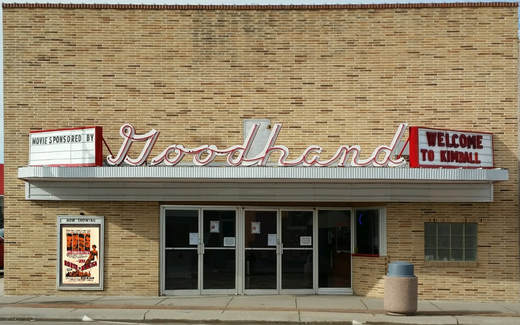
Goodhand Theatre
https://www.facebook.com/friendsofthegoodhand
The historic Goodhand Theatre has been reopened by the Friends of the Goodhand since 2016. They offer movies every first and third Saturday. You can also rent out the theater for your very own party!
Kimball History
Kimball was spawned about 1870 by the Union Pacific Railroad, a little settlement of adobe shacks to house the workers, and a water supply for the steam powered locomotives and residents of the area. Because of the prevalence of antelope, the town was known as Antelopeville.
In 1885 Charles Randall, only 19 years old, cranked out a newspaper, “The Nebraska Observer” on an old army press. He described the town as having about 100 inhabitants “…of an energetic and social nature,” and noted, a good ten-month school, a Sunday school with library, and several platted additions with free lots offered to anyone who would build upon them.
Because of confusion in 1885 with another town called Antelope, a change of name was suggested. The influence of the railroad can be attested to with the choice of “Kimball.” Thomas Lord Kimball, general manager on the U.P., would sidetrack his personal car and visit friends when passing through town. When the area separated from Cheyenne County in 1888, the county also chose the name.
Along with the Homestead Act, railroad lands were offered for sale. Thousands of immigrants were enticed to “go west.” By 1886 Kimball had become a sizable trading center with people arriving on the train daily with their livestock, household goods, and families. The town grew rapidly with new businesses and a fraternal hall for cultural gatherings. Farming was making an appearance in the valley with wheat and sugar beets. There was talk of impounding the surplus waters of the Lodge Pole Creek into a reservoir to be used for irrigation. A district was formed in 1909 for that purpose.
The local economy was boosted by Pat Maginnis’ irrigation flume factory. Later, he built the magnificent flume from Oliver Reservoir to connect with miles of irrigation ditches across the valley. This district is now a state recreation area, and circle irrigation is used.
After being named county seat, Kimball built its courthouse in the square, where City Park currently sits. Early in 1900 a county-wide high school was proposed. Kimball County High School, the first in the state, opened its doors on January 3, 1910.
In 1923 in sympathy with the farmers who lost most of their wheat crop, the town sponsored a free lunch and the hotels and cafes served 960 dinners. This was the first “Farmers Day” which is celebrated annually the last full weekend in September.
Kimball continued its city improvements, encouraged the farmers during drought years, sent young men to the service during two world wars, survived the ups and downs of the economy, and generally prospered with a population in 1950 of about 1,700.
A “second frontier” started when oil was discovered in 1951. This brought hundreds of people toKimball County. At one time 28 “producers” were operating within the city limits. The town bustled with improvements, paved streets, added schools, businesses, housing additions, and expanded every governmental entity. Within a decade the population was nearly 5,000.
In early 1960 a mammoth hole was dug south of town and residents viewed the huge Atlas missile taken to the site. In the next few years, people swarmed into Kimball as 90 Minute Man launch sites were constructed. The impact, on top of the oil boom, overwhelmed the city as it faced added city services, more new schools, and trailer villages to accommodate the influx of families. The city coped as the population climbed to nearly 8,000.
Kimball’s population now hovers at 2,500. Schools operate with smaller classes, merchants emphasize “home-town-loyalty” and boosterism. Oil activity continues quietly and air force vehicles drive daily through the city streets. The “Western Nebraska Observer” continues to observe, inform, and chronicle the history of Kimball and its environs.
Plans to renovate all of the existing missile sites in the area should double the population in the coming years. Construction has also begun on the new Kimball Hospital as well as a new incinerator at Clean Harbors south of Kimball. There are also many new businesses in town and it looks as though another boom is on the way!