
Welcome to Bushnell
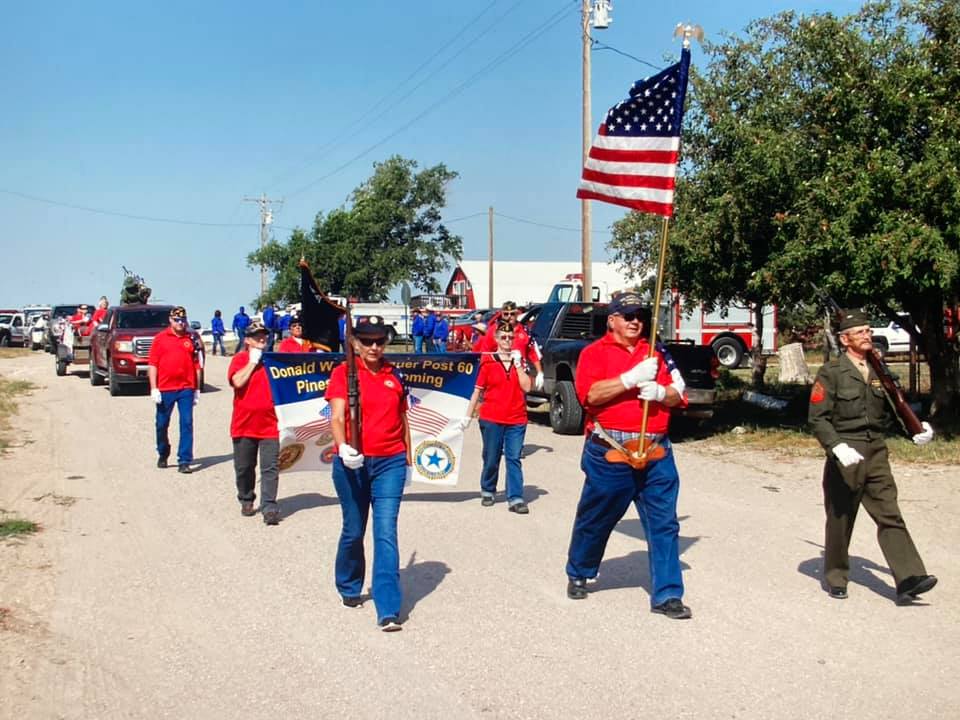
The annual Bushnell Day parade and festivities are being held on the third Saturday in August. In 2025, Bushnell Day is planned for August 16th and will feature a parade, as well as entertainment, crafts, a cornhole tournament, and food!

Things to Do in Bushnell
Bushnell Day
Join in the fun of Bushnell Day and enjoy a parade, a vendor show, food, kids activities, a cornhole tournament, a horse shoe tournament, a hog roast fundraiser for the Bushnell Volunteer Fire Department, live entertainment, and more!!
Bushnell Day will be held August 16, 2025.
Lincoln Highway
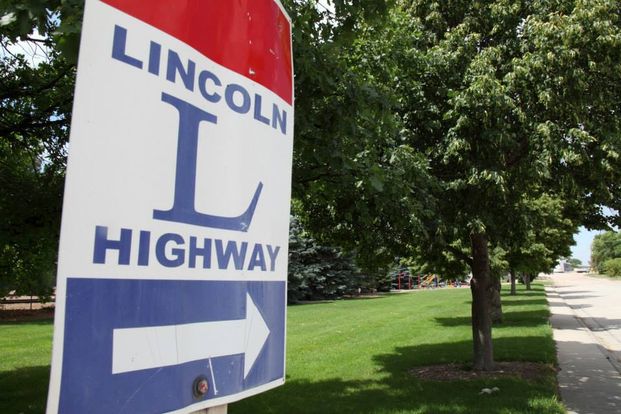
Lincoln Highway National Scenic and Historic Byway passes through Bushnell, the first town in Nebraska from the west on the byway.
You can see remnants of the original Lincoln Highway just east of Bushnell as well as the tunnels that go under the railroad tracks on the west side of town.

Community Space
The Village of Bushnell is working to create a community space next to the post office. Work is planned to begin this summer on a large mural, entertainment space, and more.
Across from the Village Office is the future site for a community center and storm shelter.
Bushnell History
Bushnell, the first town in Nebraska on U.S. Highway 30, founded in 1867, is just nine miles from Wyoming and only 15 miles from Colorado on the south. It is as old as the railroad and named for the Union Pacific Railroad director Cornelius Scranton Bushnell, who was a major figure in the development of the ironclads during the Civil War.
The first depot in 1880 was a box car on the south side of the mainline. An “Eclipse” windmill with a 20-foot diameter wooden wheel, provided water for the locomotives. When there wasn’t enough wind, a gas engine was used to keep the tower full. The only trees in the area were those planted near the tower and watered by the railroad employees.
James Newell, named postmaster in 1886, also built the first building about 1887 as a general merchandise store. Almost immediately the town was asked to change its name because it sounded too much like Rushville, so they chose “Orkney,” a name that had been used for the eastern part of the village.
Soon the town’s fortune diminished, and in 1893 it was reported the station had been abandoned and its agent removed to Omaha. However, it is noted that in 1895 the post office went back to the name “Bushnell,” and, although discontinued for a time, it was established permanently in 1903.
A disastrous train wreck in 1916 left two dead and many injured. An eastbound freight struck an engine at the west switch just as the “Los Angeles Limited” came through and plowed into the wreckage. The engine and several cars went down the embankment.
A petition carrying the signatures of “36 taxable residents,” was filed with the board ofcommissioners in 1916 asking that Bushnell be organized as an incorporated village. The ordinances were formally recorded in 1918.
In 1919 Emery Howe had a franchised electric plant. Operating on “No pay, no current” house power for washing or ironing was available from nine till noon. There was none for commercial purposes. Twenty four hour service became available in 1920.
The Bushnell Telephone Company was organized in 1914 as a partnership and later as a corporation with the switchboard in George Hammond’s residence where his wife, Maude, operated it. In the late 1950s it was sold to Panhandle Telephone Company and dial phones were installed.
A man called “Shockey” built a number of four-room, square houses in the west part of town. They still carry his name and were so well built they are still occupied, some having been remodeled and enlarged.
In its heyday, Bushnell had a full range of business: banks, general merchandise and specialty stores, a drug store with a nifty fountain, a grain elevator, cream station, pool hall, cafes, and the Reed Hotel.
The Presbyterians built the first church in 1914. Other churches included Catholic and a Mission church that evolved into the West Union Parish of the Methodist Church.
By the turn of the century the population of Bushnell precinct was 137. By 1920, 757; and now it is posted on the highway as 124.
Baseball games, contests, and races for cars, horses, and people, were held on Bushnell Festival Days in the early twenties.